We couldn't stop thinking about ticks this summer—is it for good reason?
Two data scientists dive into why everyone seemed to be talking about ticks this summer.
In much of the US, a tick is just another inconvenience associated with spending time in nature. Something to be pulled off a dog every once in a while, or flicked off of an ankle during a hike. As Philadelphia transplants (10 years and counting between us), we were aware of the ever-present threat of ticks and their diseases, but they never occupied much mental space. Until this summer.
In the span of two weeks in May, we found five of the lentil-shaped bugs on us after walking in nature. Throughout the summer, distant acquaintances and close friends reported tick bites of their own. Many of our favorite news outlets and podcasts put out lengthy explainers and deep dives on the rise of the insect.
We dreamed about ticks. We couldn't stop talking about them. Is outside now banned, we asked each other. We despaired.
As data scientists (people looking for any excuse to crunch numbers), we first looked to the data for answers: are we encountering more ticks this year because there are more of them? Or had our heightened awareness of them landed us in our own creepy-crawly echo chamber?
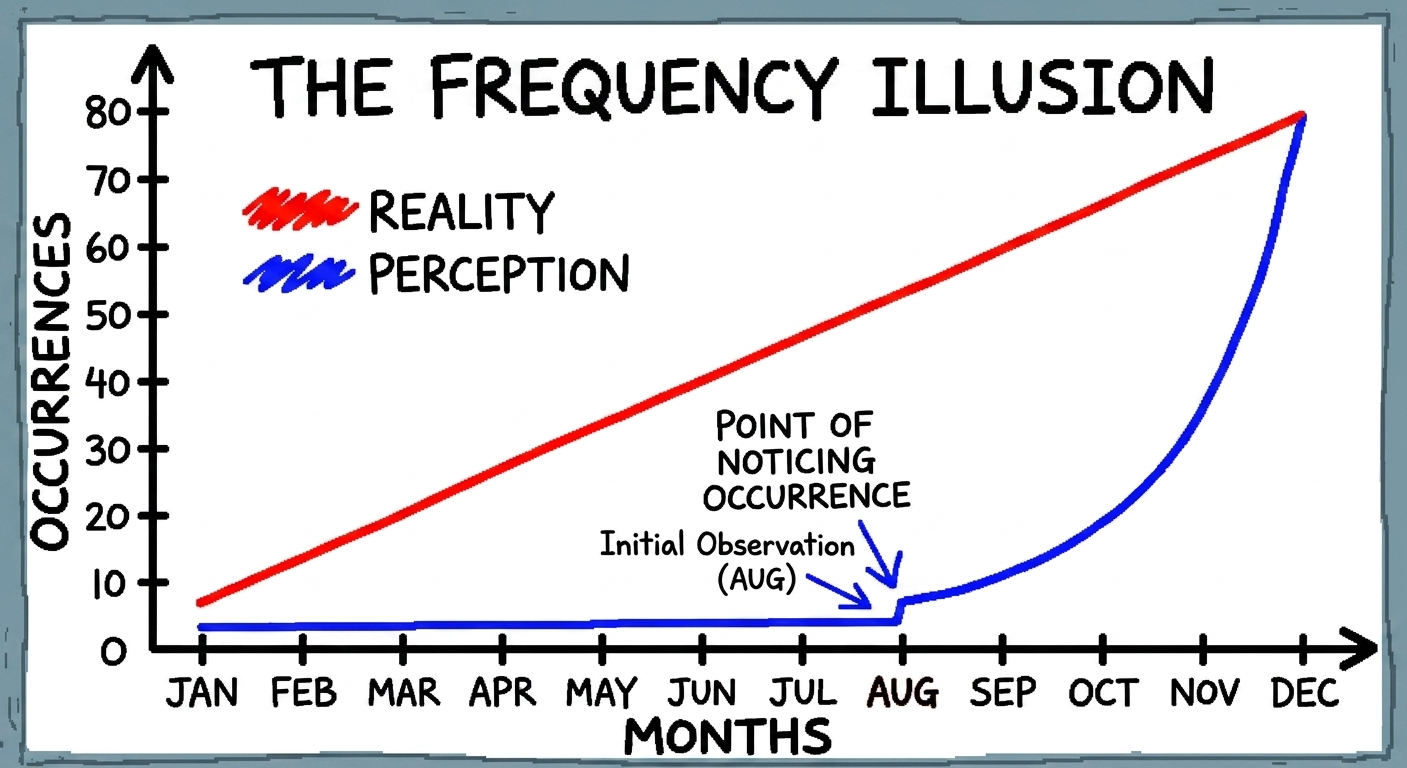
"Ticks are everywhere this summer" say two women who spent every summer weekend trampling through grassy fields. Image Source: Wikimedia Commons.
In short, yes to both: tick populations are growing, their environments are expanding, and tick-borne diseases are at an all-time high. But underscoring this new reality is an intricate web of conspiracy theories, misinformation, and a lack of government guidance. In other words, the perfect storm for a new public health crisis.
Rise of the Ticks
We were correct in at least half of our hypothesis—we are seeing more ticks because it is the season to see them.
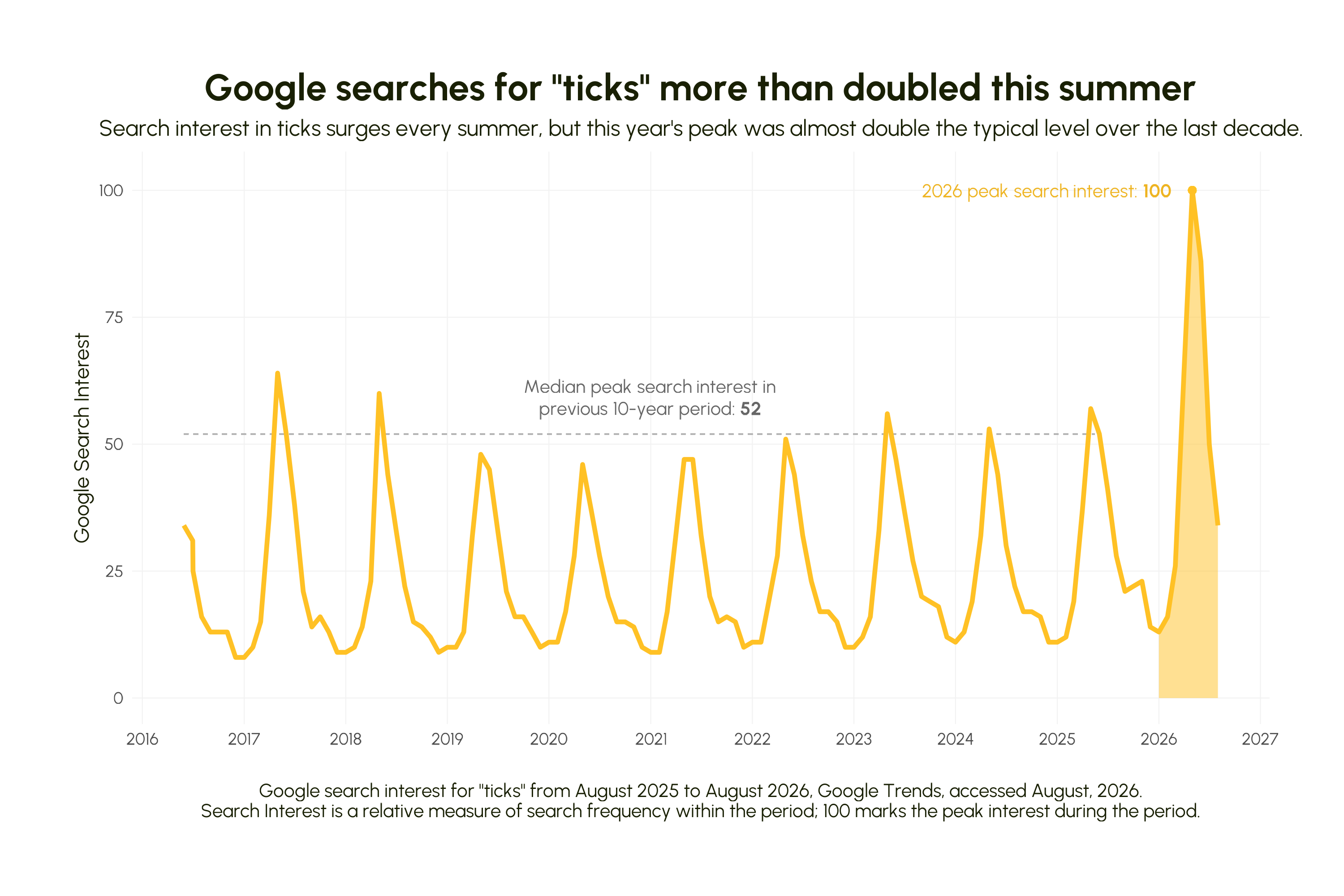
Tick populations, and our awareness of them, surge every summer. But this year, reported tick bites
this year are at a decade high.  CDC. CDC Data Show
Weekly ER Visits for Tick Bites Higher than Usual. Google searches for ticks are
also up: search interest this summer is almost double the ten-year median, marking an all-time high.
CDC. CDC Data Show
Weekly ER Visits for Tick Bites Higher than Usual. Google searches for ticks are
also up: search interest this summer is almost double the ten-year median, marking an all-time high.
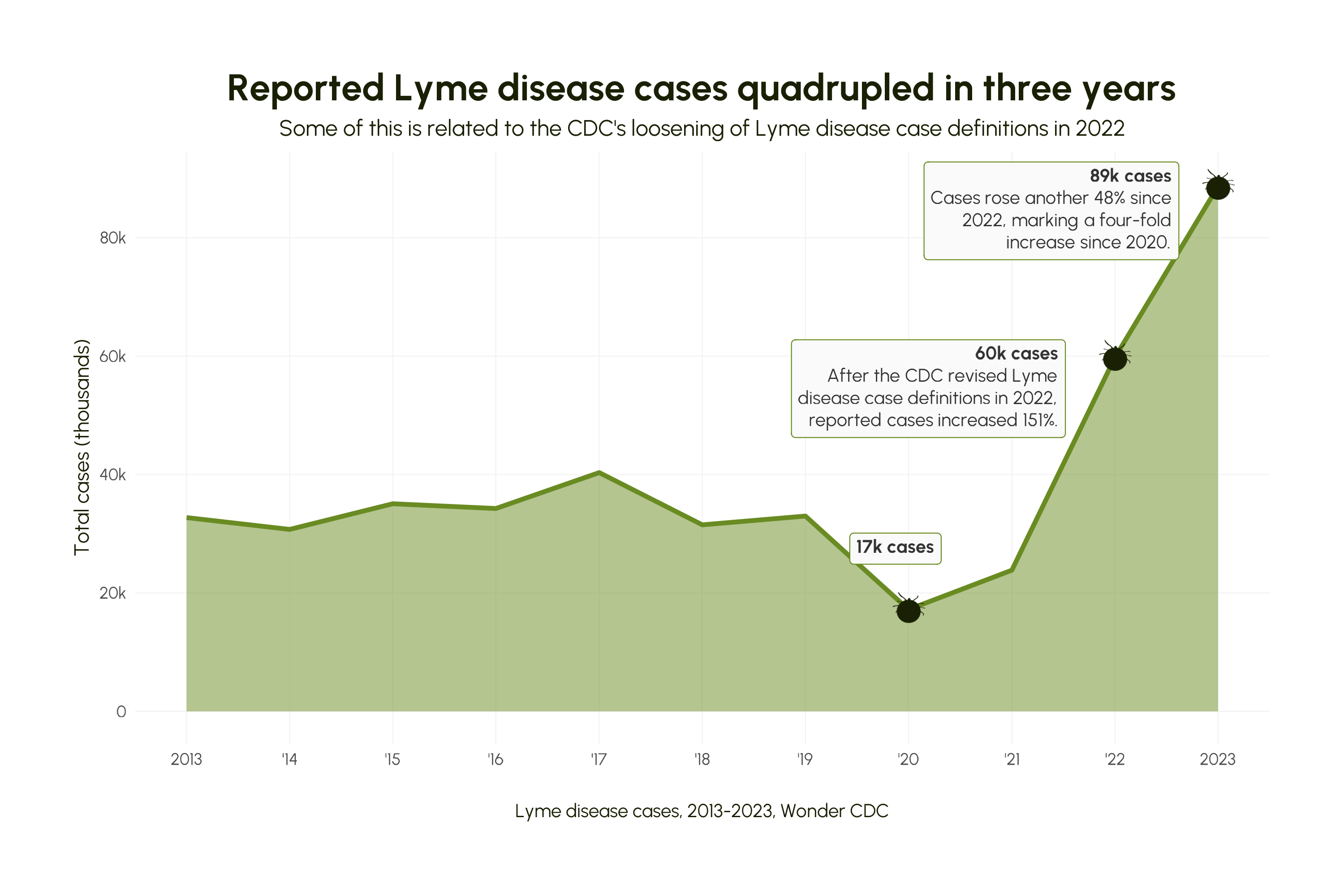
This peak in tick activity follows a trend we have been seeing for the last few decades. Diseases spread by ticks
have been steadily increasing even before this summer. Between 2020-2023, reported cases of Lyme disease, the most
common vector-borne illness in the US, increased fourfold.CDC. County By County Lyme Disease
Cases. New diseases are exploding, too. Alpha-gal Syndrome,
which causes severe mammalian meat allergy in humans, was first recognized in humans in 2011. Today, an estimated
450,000 people live with it and most scientists consider that an undercount.Ross et al.
Alpha-Gal on the Rise: The Alarming Growth of Alpha-Gal Syndrome in High-Risk Regions.
Between Fact and Fiction
So ticks really are increasing everywhere. But why now? An overview of the popular press and scientific research around ticks gives us dozens of possible reasons: climate change, reforestation efforts, resurgence of deer populations, habitat encroachment. While we will explore some of these points in our next analysis, the conclusion we got was that we simply can't be sure.
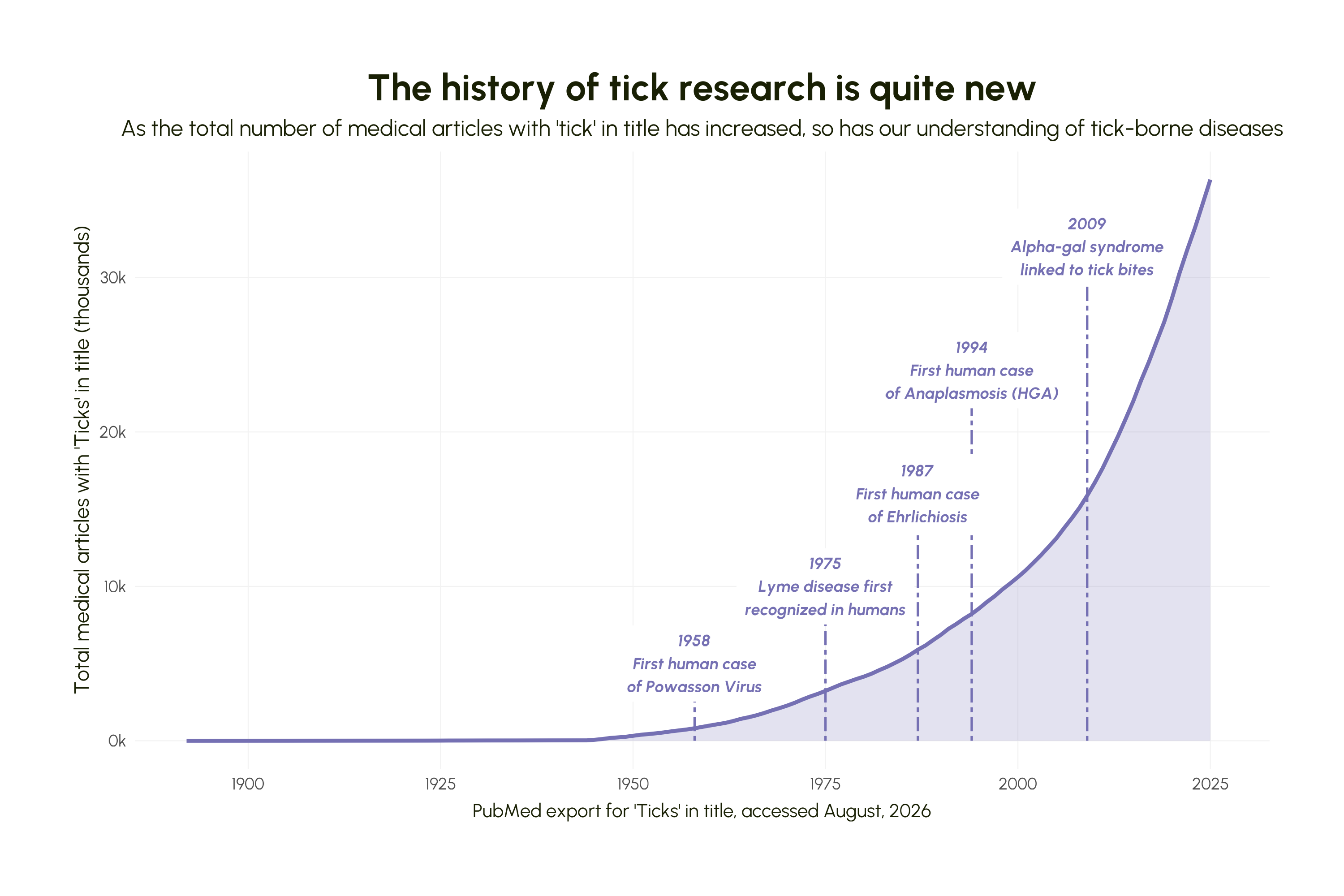
Despite coexisting alongside ticks for millenia, our awareness of their public health impacts is relatively
recent. Most of the human tick borne illnesses—Lyme disease included—were only discovered in the late 20th
century.CDC. Surveillance for Ixodes scapularis and pathogens found in this tick species in the
United States. For context, mosquito-borne illnesses have modern scientific research
dating back to 1870s.Cox. History of the discovery of the malaria parasites and their
vectors Today, there are
far more scientists studying the implications of rising tick populations, but we are far from knowing what to do
about it and the science is constantly evolving.
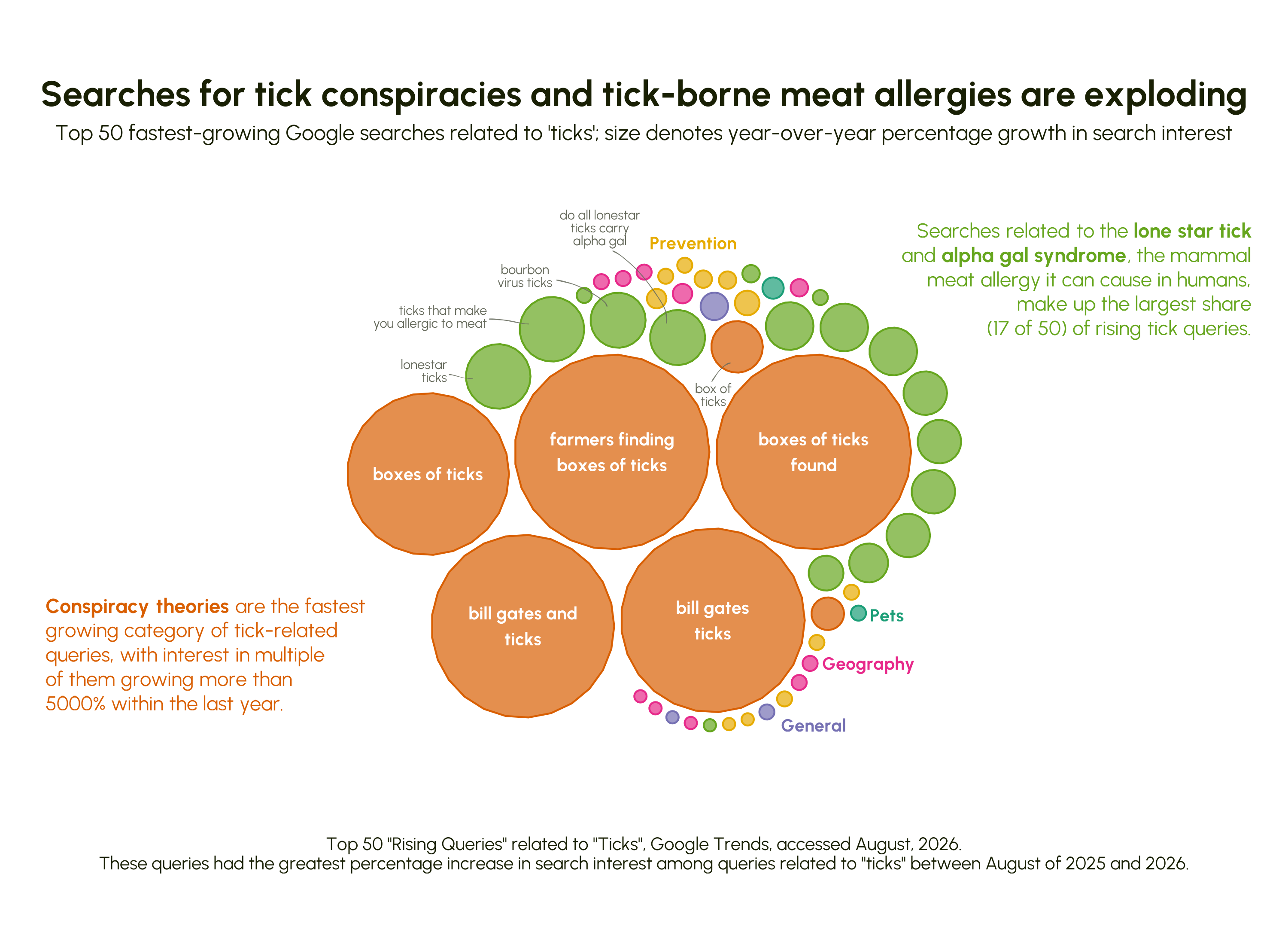
Unsurprisingly, when a rapidly emerging public health topic breaches into popular consciousness, the uncertainty and fear it engenders creates fertile ground for the preternatural. While searches about ticks and their diseases in general are increasing, the fastest-growing search queries are related to conspiracy theories, namely a growing theory that the government is dropping boxes of ticks on farmland.
The visual below shows the fifty fastest-growing tick-related queries in the United States within the last twelve months. Conspiracy theories come in first, with “farmers finding boxes of ticks” shooting up more than 5000% since Summer 2025. In sheer numbers, the majority of the fifty queries are related to the lonestar tick, carrier of the red-meat-allergy-causing Alpha-gal Syndrome.
The only thing we have to fear is fear itself
It is easy to dismiss these conspiracies as just another overimagination of tiktok; but when we look at the facts,
it's hard to blame people for being drawn to them. For those suffering from tick-borne illnesses or living in
areas where the risk is increasing, uncertainty can be distressing. There is currently no widespread
preventative medicine for tick-borne illnesses. The standard CDC guidance for bites is simply to remove the tick
and wait until symptoms emerge before pursuing treatment.CDC. What to Do After a Tick
Bite.
Despite the majority of tick bites occuring in people's own yards, the CDC's number one guidance on preventing
bites is
to avoid grassy and wooded areas.
It is therefore not surprising why many people, confronted with the complicated science of blood-sucking insects and the lack of actionable government guidance, turn to conspiracy theories. After all, when the scientifically recommended advice is simply, “stop going outside,” why wouldn't you look for other answers?
@bethanienack Land Owner accuses unknown Helicopter Operator of dropping Boxes of Ticks on their farm. #tick #helicopter #farm #scary #fyp ♬ original sound - Bao
This piece started as an exercise of personal curiosity. Every day that we've worked on this project, we've seen new podcasts, news articles, and research papers published as science continues to evolve and the crisis deepens. We struggled to piece together the research papers and government guidance and understand what it all means for us.
As spatial data people, we wanted to read analyses of where cases are occurring and who they are impacting, and found very few. The more we read, the more questions we had. Who is most impacted by the tick-borne public health crisis? What are the factors contributing to its rapid spread? What are tick-borne diseases and how do you get them? Why is there so little information about ticks in the first place—and why are tick conspiracy theories so popular?
We quickly realized that this research can't be limited to just a few data visualizations or an article. Ticks deserve something bigger than that. In the next few months, we will be unpacking our findings and sharing them so that others who share our concern have a centralized repository of information. There still are more unknowns than known—but at least we can confirm that the government is not dropping boxes of ticks in farms (probably).
References
- Centers for Disease Control and Prevention. (2026, April 23). CDC Data Show Weekly ER Visits for Tick Bites Higher than Usual. https://www.cdc.gov/media/releases/2026/2026-cdc-data-show-weekly-er-visits-for-tick-bites-higher-than-usual.html
- Centers for Disease Control and Prevention. (2023). Dataset: County By County Lyme Disease Cases. Click to download dataset.
- Ross M, Daley G, Burnard ML, Sen A, Beyene E, Bisrat M, Zinabu SW, Abrie M, Michael M. (2025, July 21). Alpha-Gal on the Rise: The Alarming Growth of Alpha-Gal Syndrome in High-Risk Regions. Cureus. https://pmc.ncbi.nlm.nih.gov/articles/PMC12365936/
- Centers for Disease Control and Prevention. (2019). Surveillance for Ixodes scapularis and pathogens found in this tick species in the United States. https://cdc.gov/ticks/resources/TickSurveillance_Iscapularis-P.pdf
- Cox, F. (2010, Feb 1). History of the discovery of the malaria parasites and their vectors. Parasites Vectors. https://link.springer.com/article/10.1186/1756-3305-3-5
- Centers for Disease Control and Prevention. (2026, June 9). What to Do After a Tick Bite. https://www.cdc.gov/ticks/after-a-tick-bite/index.html